
No products in the cart.

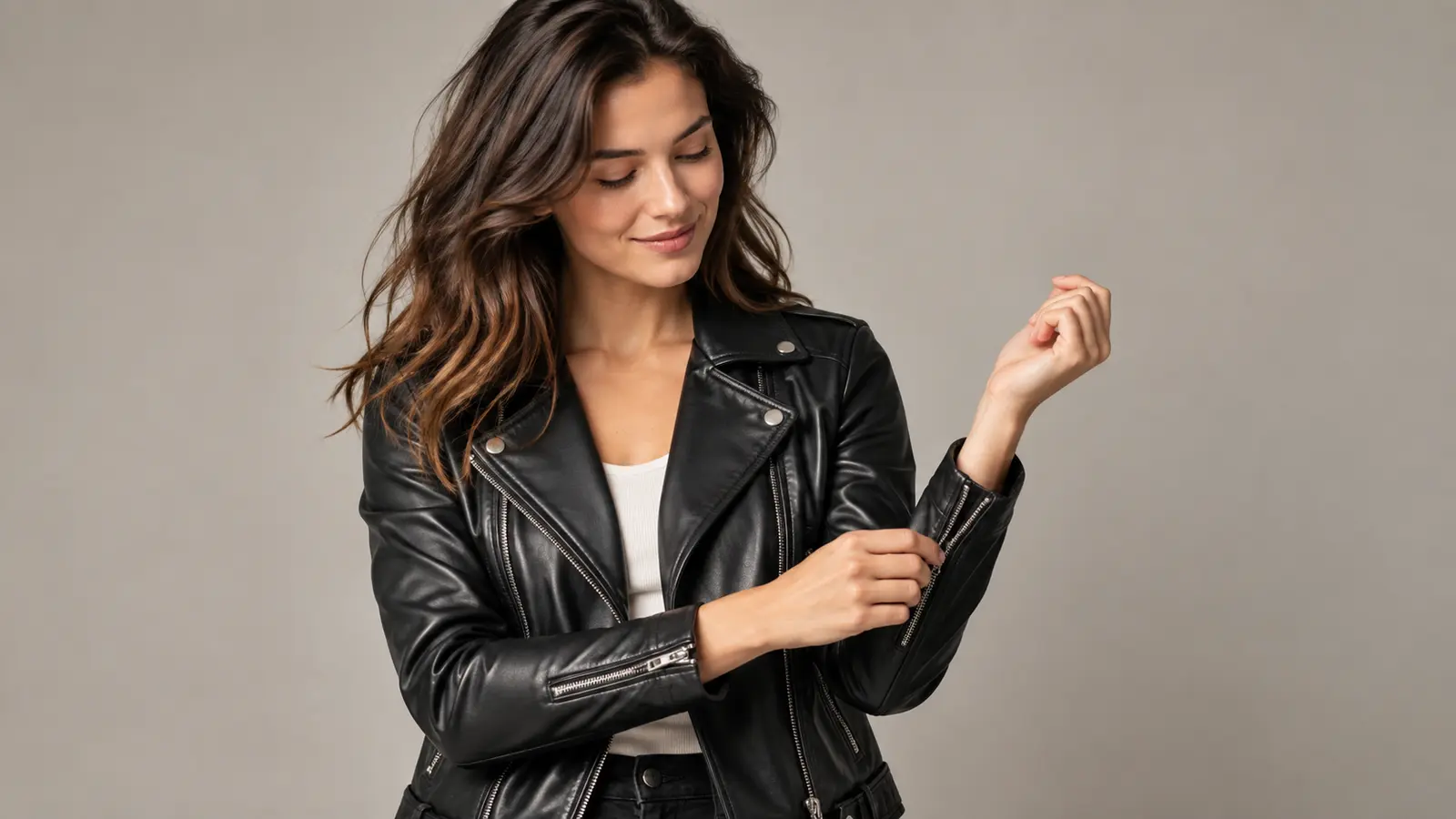
How to Break In a Women’s Leather Biker Jacket Safely Without Damaging It
The safest way to break in a women’s leather biker jacket is to wear it regularly for short periods and move naturally. Let the leather soften gradually. Use conditioner only if the care label confirms it suits the leather and finish, and patch-test first. Break-in cannot reliably correct wrong shoulders, sleeves or severe bust restriction.
The Safest Way to Break In a Leather Biker Jacket
Start with the least invasive method: regular wear in a clean, dry environment. Put the jacket on over the type of light base layer you expect to wear most often, zip it only if it closes comfortably, and use normal arm movement. Natural body warmth and repeated flexing help leather relax at the elbows, shoulders and other high-movement points without abruptly changing the finish.
A new jacket may feel structured, especially through the sleeves and upper back. The goal is gradual conformity—not aggressive stretching. Stop if movement causes pain, numbness, sharp pressure, stressed seams, distorted hardware or obvious surface damage.
Before trying any product, check the jacket’s care label and product information. For an OvrOne jacket, compare your measurements with the OvrOne size guide and confirm the material and finish on the individual product page.
Before You Start: Is the Jacket the Right Size?
Break-in can improve feel and movement within a correctly sized jacket. It cannot rebuild the pattern, move a shoulder seam, lengthen a sleeve or create substantial room through the bust. Diagnose fit before treating stiffness.
| What you notice | Likely interpretation | Best next step |
|---|---|---|
| The leather feels firm, but the shoulder seams sit correctly and the jacket closes without sharp pulling. | Normal new-leather structure may ease with wear. | Begin short wear sessions and reassess after several wears. |
| Elbows or upper back feel slightly resistant only during movement. | High-movement areas may soften and crease naturally. | Use normal arm movement; do not force extreme stretches. |
| The zipper closes only with strong pulling or the front forms deep horizontal stress lines. | The body may be too small; break-in is not a reliable fix. | Stop forcing the closure and compare measurements or exchange options. |
| Shoulder seams sit inside or beyond the shoulder point. | Pattern or size mismatch rather than simple stiffness. | Consider another size or style. |
| Sleeves are clearly too short or too long. | Break-in will not change sleeve length meaningfully. | Exchange, alter professionally or choose another style. |
| You feel pain, numbness or restricted breathing. | The jacket is not safely wearable in its current fit. | Remove it and seek an exchange or specialist advice. |
What normal new-leather stiffness feels like
Normal stiffness feels like even resistance rather than a single painful pressure point. The jacket should still allow you to breathe, stand naturally, bend the elbows and raise the arms to everyday positions. Slight resistance at the elbows, upper back and zipper line can lessen as the leather flexes.
Fit problems break-in will not reliably fix
- Shoulder seams that sit noticeably in the wrong place.
- Sleeves that are materially too short or too long.
- Severe bust or chest restriction, especially when zipped.
- A collar that presses painfully into the neck.
- Hardware or seams that distort when the jacket is closed.
- Numbness, tingling, pain or restricted breathing.
How to Break In a Leather Biker Jacket Step by Step
- Confirm the material, finish and care instructions. Read the product page and care label before applying anything. If the hide or finish is unclear, default to dry wear only or ask the seller or a leather-care professional.
- Wear it for short, regular sessions. Start indoors for roughly 20–30 minutes so you can monitor pressure points and remove the jacket if discomfort develops. Exact timing is not important; gradual repetition is.
- Use normal arm and shoulder movement. Reach forward, bend the elbows, place your hands in the pockets and perform ordinary daily movements. Avoid exaggerated pulls, deep forced stretches or asking another person to tug the jacket.
- Increase wear time gradually. If the fit remains comfortable and the finish looks normal, extend wear in later sessions. Let the jacket rest on a wide hanger between wears.
- Let natural creases develop. Elbows, sleeve fronts and the upper back will crease where you move. These are normal break-in zones; trying to manufacture creases with twisting, weights or abrasion adds unnecessary risk.
- Reassess fit, not just softness. After several wears, ask whether mobility is improving without seam stress. If the core fit remains wrong, stop treating it as a break-in problem.
Does Leather Type Change the Break-In Process?
Yes. Hide, thickness, tanning and surface finish all affect how quickly a jacket relaxes and what care it can tolerate. If the product description does not identify the hide or finish, do not guess.
| Leather or finish | What to expect | Safest approach |
|---|---|---|
| Cowhide or another firmer leather | Usually more structured and slower to relax. | Use repeated wear and normal movement; avoid trying to accelerate the process with heat or water. |
| Lambskin or another softer leather | Often pliable from the start and easier to mark. | Keep handling gentle; avoid force, abrasion and unnecessary product. |
| Semi-aniline or smooth finished leather | Some surface protection may be present, but compatible-care requirements still vary. | Follow the label; patch-test any approved conditioner in a hidden area. |
| Distressed or vintage-looking finish | Colour variation and wear effects are intentional and can change with products. | Avoid generic conditioners unless the care guidance confirms compatibility. |
| Suede or nubuck | Open nap can stain, flatten or darken when treated incorrectly. | Use only suede/nubuck-specific care and preferably professional advice. |
| Unspecified real or genuine leather | The marketing term does not reveal the exact hide or finish. | Use dry wear only until the material and care method are verified. |
Cowhide and other firmer leathers
Firmer hides may need more wear before elbows and shoulders feel natural. That does not justify more force. A slow process protects the grain, seams and shape while making it easier to distinguish normal stiffness from a poor fit.
Lambskin or softer leathers
Softer leather often needs less break-in and can show pressure marks sooner. Use light handling and avoid kneading, rolling or loading the jacket with weight.
Distressed, vintage-looking and specialty finishes
A product that creates an even result on smooth finished leather can darken, polish or flatten a distressed surface. Treat the finish—not simply the word “leather”—as the deciding factor.
Suede or nubuck: follow finish-specific care
Do not use ordinary smooth-leather conditioner on suede or nubuck unless it is specifically labelled safe for that finish. These materials may require specialist brushes, protectors or professional cleaning.
Should You Use Leather Conditioner to Speed Up Break-In?
Conditioner is not required for every new jacket and should not be used as a universal softening shortcut. It may help restore flexibility when a compatible product is used on suitable leather, but the wrong formula or too much product can darken colour, alter sheen, leave residue or affect specialty finishes.
- Check the jacket’s care label and the manufacturer’s guidance.
- Confirm that the product is intended for the specific leather and finish.
- Patch-test a small, hidden area and allow it to dry fully before judging the result.
- Use a thin, even application only when the instructions support it.
- Do not repeat applications simply because the jacket still feels new.
- For valuable, delicate, suede/nubuck or uncertain finishes, ask a leather specialist.
Can You Wear a Hoodie or Sweater Underneath to Stretch the Jacket?
A normal layer can help you evaluate the amount of room you actually need, but it should not be used as a force-stretching device. If the jacket closes comfortably over a light sweater and movement remains natural, short wear may help it settle. If the zipper, seams or shoulders strain, the jacket likely needs more room rather than more stretching.
Caution: Do not stuff the jacket with bulky clothing, cushions or objects while stored. Uneven pressure can distort panels, stress seams and create unwanted creases. If layering is part of your normal wardrobe, choose size based on measurements and the intended layer from the start.
Break-In Methods to Avoid
| Risky method | Why it can damage the jacket | Safer alternative |
|---|---|---|
| Soaking or spraying with water | Can cause staining, stiffness, shape change, finish damage or uneven drying. | Keep the jacket dry; if accidentally damp, blot gently and air-dry away from heat. |
| Hair dryer, radiator, tumble dryer or direct heat | Can dry out leather, shrink panels, weaken adhesives and damage lining or finish. | Use room-temperature wear and natural air circulation. |
| Rubbing alcohol or harsh household cleaners | May strip oils or colour and permanently alter the surface. | Use only leather-specific care approved for the exact finish. |
| Petroleum jelly, baby oil or cooking oils | Can over-saturate, darken, attract dirt or become rancid. | Use a compatible leather conditioner only when care guidance supports it. |
| Aggressive sanding or abrasion | Removes finish and weakens the surface rather than safely softening it. | Let wear marks develop naturally. |
| Forced stretching, weights or twisting | Can deform panels, stress stitches and damage hardware. | Use ordinary movement and exchange a genuinely restrictive fit. |
How Do You Know When a Leather Jacket Is Breaking In Normally?
- Elbows bend more naturally without sharp pulling.
- The upper back feels easier during ordinary reaching.
- The leather develops gentle creases at movement points.
- The zipper still lies straight and seams remain smooth.
- The surface colour and sheen stay consistent with the original finish.
- Comfort improves without the jacket becoming distorted or excessively loose.
Stop and reassess if you notice seam puckering, cracking, peeling, colour transfer, a new sticky surface, warped panels, damaged hardware or discomfort that does not improve.
Break-In vs Wrong Size: When to Keep, Exchange or Ask a Specialist
| Decision | Choose this when | Action |
|---|---|---|
| Keep breaking it in | Fit points are correct, closure is comfortable and stiffness is easing evenly. | Continue short, regular wear and natural movement. |
| Exchange or change style | Shoulders, sleeve length or body room are clearly wrong, or the zipper requires force. | Stop stretching attempts and compare measurements with another size or silhouette. |
| Ask a leather specialist | The finish is unusual, the jacket is valuable, or you see staining, dryness, cracking or accidental damage. | Pause home treatment and get product-specific advice. |
| Check with OvrOne | The product material, finish or size guidance is unclear. | Use the live product page, size guide or customer support before applying care products. |
What OvrOne Customers Ask About New-Jacket Stiffness and Break-In
| Theme | Data |
|---|---|
| Reporting date range | July 1, 2026 – October 1, 2026 |
| Total orders | 2,640 |
| Total relevant customer-service, review and return/exchange cases | 286 |
| New-jacket stiffness | 54 cases |
| Break-in / softening questions | 48 cases |
| Restricted movement | 39 cases |
| Expectations that leather will stretch | 42 cases |
| Conditioner use questions | 35 cases |
| Break-in / fit-related exchanges | 68 cases |
| Total tagged theme mentions | 286 |
| Smooth leather finish | 164 relevant cases |
| Vintage / distressed finish | 76 relevant cases |
| Quilted leather finish | 46 relevant cases |
| Source fields | Order records, customer-service tickets, review tags, return/exchange reasons and product finish attributes |
| Classification method | Cases grouped by explicitly recorded themes; finish breakdown based on recorded product attributes |
Active OvrOne Women’s Biker Jacket Examples
Use each product page as the source of truth for material, finish and care. These examples are currently listed in the OvrOne women’s biker category:
- Ace Biker Women’s Leather Jacket — 100% genuine leather with a smooth finish and a slim, tailored fit; professional leather cleaning is recommended.
- Women’s Black Real Leather Biker Jacket — real leather with a semi-aniline finish; verify care compatibility before applying conditioner.
- Women’s Brown Vintage Leather Biker Jacket — real lambskin in a vintage-style brown finish; avoid assumptions that a general product is safe for the finish.
- Women’s Blue Genuine Leather Biker Jacket — real leather in blue; protect the colour by avoiding harsh cleaners and unverified oils.
Browse the full OvrOne women’s biker leather jacket collection. For related construction and finish comparisons, review zipper leather jackets, genuine leather jackets and asymmetrical leather jackets. If black is your preferred colour, see women’s black leather jackets.
30-Second Safe Break-In Checklist
- Confirm the jacket fits at the shoulders, sleeves and bust before attempting break-in.
- Check the material, finish and care label.
- Wear it for short, regular sessions.
- Use ordinary arm and shoulder movement.
- Keep the jacket dry and away from direct heat.
- Use conditioner only when compatibility is verified and a hidden patch test passes.
- Stop if seams strain, hardware distorts, the surface changes or discomfort persists.
- Exchange or seek specialist advice when the problem is size, damage or an uncertain finish.
Frequently Asked Questions
How long does a women’s leather biker jacket take to break in?
There is no universal timeline. Hide type, thickness, finish, construction, starting softness and wear frequency all matter. Look for gradual improvement in elbow and shoulder movement rather than expecting a fixed number of days.
Can I stretch a leather biker jacket by wearing it?
Normal wear may let correctly sized leather relax slightly at movement points, but it will not reliably move shoulder seams, lengthen sleeves or create major room through the bust. If the fit is materially wrong, exchange or alteration is safer.
Is leather conditioner necessary for a new biker jacket?
Not automatically. Use conditioner only when the jacket’s care guidance and the product label confirm compatibility. Patch-test first, apply sparingly and avoid generic conditioner on suede, nubuck or specialty finishes.
Can I use water to soften a leather jacket?
No. Soaking or spraying leather can create staining, stiffness, shrinkage, uneven drying and finish damage. The safer default is dry wear, natural movement and finish-specific care.
Can I use a hair dryer to speed up break-in?
No. Direct heat can dry, shrink or distort leather and may damage the lining, adhesives or finish. Let the jacket warm naturally during wear and air-dry at room temperature if it becomes damp.
When should I stop breaking in the jacket and exchange it?
Stop if the shoulder position or sleeve length is wrong, the closure needs force, the jacket restricts breathing, or you feel pain or numbness. Those are fit problems that ordinary break-in should not be expected to solve.
Final Takeaway
A women’s leather biker jacket should soften through ordinary wear—not through aggressive shortcuts. Confirm the size first, use short sessions and natural movement, and treat any conditioner as a finish-specific care decision rather than a guaranteed softening method. When the shoulders, sleeve length or closure are wrong, an exchange or specialist assessment is safer than forced stretching.
Ready to compare current silhouettes? Explore women’s biker leather jackets at OvrOne and use the size guide before choosing room for your usual layers.