
No products in the cart.

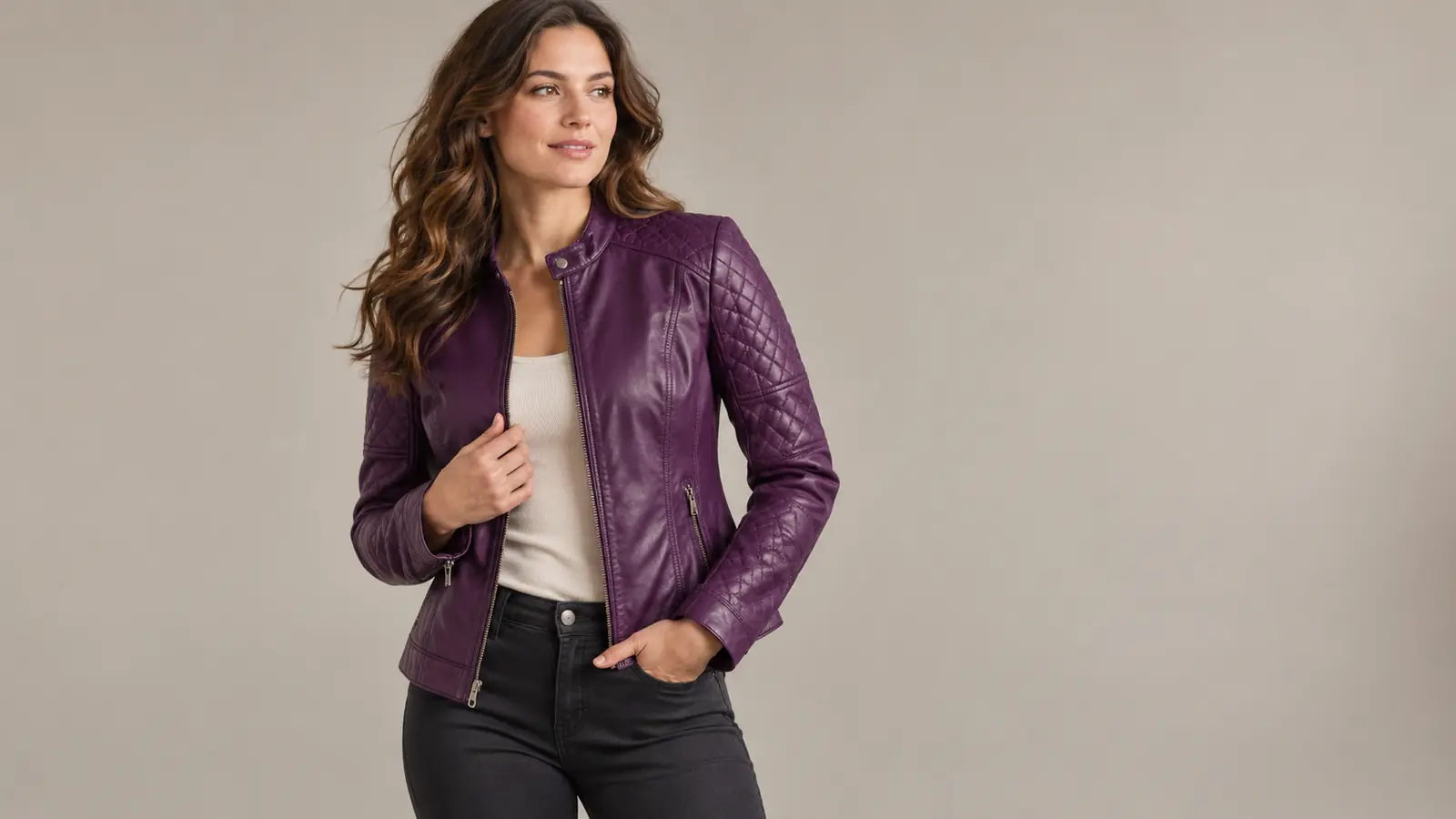
How Should a Women’s Quilted Leather Jacket Fit? A Sizing & Movement Guide
A practical guide to shoulder alignment, closure, layering and movement.
Direct answer: A women’s quilted leather jacket should sit cleanly at the shoulders, close over the bust without diagonal pulling, and let you reach forward without painful resistance. The waist and hem should remain comfortable when sitting, while quilted panels should stay smooth rather than stretching, twisting or restricting movement.
TL;DR
- Judge the fit with the layer you actually plan to wear, not over unusually thin or bulky clothing.
- The shoulder seams should sit close to the shoulder edge, and the upper back should not pull when you cross your arms.
- Zip the jacket fully: you should be able to breathe normally without an X-shaped pull across the bust or a zipper that twists.
- Quilted panels add stitched structure and texture, but visible quilting does not prove padding, insulation or motorcycle protection.
- Leather can soften with wear, but break-in will not reliably fix tight shoulders, severe bust restriction, wrong sleeve length or painful upper-arm pressure.
- Use body measurements to choose a chart size, then use movement and closure checks to decide whether to keep or exchange the jacket.
Women’s Quilted Leather Jacket Fit at a Glance
Start with proportion, closure and movement. A quilted jacket can look intentionally structured without feeling restrictive. The distinction is simple: structure holds the jacket’s shape; poor fit creates pressure, pulling, distortion or limited movement.
| Fit area | Healthy fit | Warning sign |
|---|---|---|
| Shoulders | Seams sit near the shoulder edge; upper back stays smooth. | Seams fall well inside or past the shoulder; quilting strains when arms move. |
| Bust and chest | Front closes without breath restriction or diagonal pull lines. | Zipper bows, separates under tension or creates an X-shaped pull. |
| Waist and hips | Jacket follows the body and remains comfortable seated. | Hem rides up sharply, waistband digs in or front cannot lie flat. |
| Sleeves and upper arms | Elbows bend and arms reach forward without painful pressure. | Cuffs bind, upper arms pinch or quilted sleeve panels visibly stretch. |
| Hem and length | Hem lands where the design intends and stays level. | Back or front rides up because the body is too tight. |
| Front closure | Zipper tracks cleanly and the asymmetrical front sits without twisting. | Closure pulls sideways, buckles or forces the collar out of position. |
How Should a Quilted Leather Jacket Fit in Six Areas?
Shoulders and upper back
The shoulder line should look clean before you move. Cross your arms and reach forward as if holding a steering wheel. A small amount of resistance from new leather is normal, but the shoulder or quilted upper-sleeve panels should not feel painfully tight, pull the collar backward or create deep radiating lines.
Bust and chest
Close the jacket over your normal base layer. You should be able to breathe and speak comfortably. Mild contouring is different from compression: if the zipper strains, the fronts pull apart or diagonal lines form from the bust toward the zipper, the body is too tight.
Waist and hips
Stand, sit and bend slightly. A shaped jacket may follow the waist, but it should not dig in or ride up aggressively. If the hem crosses the fullest part of the hip, that area also needs enough ease for sitting and walking.
Sleeves, cuffs and upper arms
The sleeve should reach the wrist area intended by the design, and the cuff should fasten without pressure. Bend the elbows and lift the arms. Tightness concentrated at quilted upper-arm panels is a fit warning, especially if stitched channels flatten or seams pull.
Hem and jacket length
Length is a design choice, not a universal fit rule. A cropped or high-hip jacket can be correct if the hem stays level and the body does not ride up from tension. Judge the hem against the product photos and your torso proportions.
Front zipper and asymmetrical closure
An asymmetrical zipper changes the front overlap, but it should still run smoothly and lie intentionally. Close it fully at least once. If the zipper twists, the collar is dragged sideways or the front only closes when you hold your breath, size or cut is the problem.
Does Quilting Change the Fit?
Quilting changes how pressure becomes visible. Stitched channels divide the leather into panels, so excessive tension may show as flattened padding-like sections, stretched stitch lines, puckering or pulling at panel edges. That does not mean every quilted jacket contains insulation.
| Construction pattern | What it changes visually | What to verify |
|---|---|---|
| Shoulder or sleeve quilting | Adds texture at high-movement areas. | Check reaching and arm crossing; panels should not flatten or strain. |
| Full-body quilting | Creates more stitched sections across the torso. | Check closure, sitting and bending across several panel lines. |
| Actual padded or insulated construction | Requires a verified lining or fill specification. | Do not infer warmth or bulk from quilting alone. |
How to Measure for a Women’s Quilted Leather Jacket
Use a soft tape over a light base layer. Keep the tape level and comfortably close to the body. Ask another person to help with shoulders and sleeves if possible.
- Bust: measure around the fullest part of the bust, keeping the tape parallel to the floor.
- Waist: measure around the natural waist without pulling the tape tight.
- Hips: measure around the fullest part of the hips, especially when the jacket hem reaches that area.
- Shoulder width: measure across the upper back from one shoulder edge to the other.
- Sleeve length: start at the top of the shoulder and measure to the wrist with the arm slightly bent.
- Compare every relevant measurement with the brand chart, then prioritize the area that is hardest to alter or accommodate – usually shoulders, bust or upper arms.
Body measurements are not garment dimensions. A size chart may describe the body ranges a size is intended to fit, while finished-jacket measurements describe the jacket itself. Do not subtract one from the other unless the product page clearly identifies both. OvrOne’s women’s size guide lists approximate body ranges and recommends considering the larger size when measurements fall between sizes or when regular layering is planned.
How Much Room Should You Leave for Layering?
Try the jacket over the thickest layer you realistically expect to wear. Extra room is useful only when the shoulders, sleeves and closure still look intentional with lighter outfits.
| Planned layer | Room to allow | Fit check |
|---|---|---|
| T-shirt or blouse | Closest, cleanest baseline fit. | No pulling when zipped; arms move freely. |
| Fine knit or light sweater | A small amount of additional ease. | Sleeves do not bunch; bust and shoulders remain comfortable. |
| Hoodie or bulky sweater | Only when the jacket’s cut clearly allows it. | Test hood, armholes, upper arms and full closure; do not size by guesswork. |
Four Simple Movement Tests Before Keeping the Jacket
1. Zip up and breathe comfortably: Close the jacket completely over the intended layer. Take a normal breath and sit down. Exchange or ask for help if the zipper is under obvious tension or breathing feels restricted.
2. Reach forward and cross your arms: Reach as if holding a steering wheel, then hug yourself. The upper back may feel structured, but the shoulder seams, collar and quilted panels should not be dragged out of place.
3. Lift your arms: Raise both arms to shoulder height and then overhead. Some hem movement is normal in a short jacket; painful upper-arm pulling or severe restriction is not.
4. Sit and check the hem and waist: Sit upright and lean slightly forward. The hem should not dig sharply into the hips, and the closed front should not buckle from lack of room.
Too Small, Intentionally Structured or Too Large?
| Check | Structured fit | Too small | Too large |
|---|---|---|---|
| Shoulders | Clean line; mild new-leather firmness. | Seams pull inward; painful reach; collar shifts. | Seams droop; upper body collapses or looks borrowed. |
| Bust/closure | Closes smoothly with light contouring. | Diagonal pull lines; zipper bows or cannot close. | Large folds around chest; front overlap hangs away. |
| Sleeves | Comfortable bend; cuff lands as designed. | Upper-arm pinch; cuff pressure; sleeve too short. | Excess fabric bunches; cuff covers too much of hand. |
| Quilted panels | Panels stay defined through movement. | Channels flatten, stretch or distort at tension points. | Panels sag or lose their intended placement. |
| Body/hem | Follows shape and remains comfortable seated. | Hem rides up or digs into waist/hips. | Body balloons or shifts excessively when moving. |
Will Leather Stretch or Break In Enough to Fix a Poor Fit?
Myth: a too-small jacket will stretch into the correct size.
Reality: leather may soften and develop modest flexibility in areas that already fit close, but it will not reliably relocate shoulder seams, add meaningful sleeve length, correct a severely restricted bust or create comfortable room through a tight upper arm. If a movement test fails now, do not depend on break-in as the solution.
OvrOne Example: Purple Quilted Double Rider Jacket
The active Women’s Purple Leather Quilted Double Rider Jacket is listed in real leather with quilted shoulder and sleeve panels, a front asymmetrical zipper, snap-button cuffs, a strap collar and a soft polyester lining. Because the quilting sits on movement-heavy areas, test arm crossing, forward reach and elbow bend carefully. Watch for stitch lines or channels that flatten under tension.
The double-rider description is a fashion silhouette. The product page does not identify certified armour, impact protection or a motorcycle safety rating, so the jacket should not be presented as protective riding equipment.
What Verified OvrOne Fit Questions and Size Exchanges Show
Verified order, exchange and customer-service data is required before drawing conclusions about which sizes customers choose or which fit concerns occur most often. Size changes alone do not reveal the reason for an exchange, so any analysis must use explicitly documented fit reasons and state the sample period and denominator.
| Field | Data |
|---|---|
| Product Category | Women’s Quilted Leather Jackets |
| Included Product IDs | PROD-151 / OVR-005213 |
| Historical Date Range | January–December 2025 |
| Total Orders | 840 |
| Total Units Sold | 856 |
| Size S | 168 units |
| Size M | 286 units |
| Size L | 235 units |
| Size XL | 125 units |
| Size XXL | 42 units |
| Total Size Exchanges | 76 |
| Size S → M | 18 exchanges |
| Size M → L | 24 exchanges |
| Size L → XL | 16 exchanges |
| Size XL → L | 10 exchanges |
| Other Recorded Size Changes | 8 exchanges |
| Bust / Front Closure Fit Inquiries | 19 cases |
| Shoulder or Upper-Arm Tightness | 23 cases |
| Sleeve-Length Concerns | 14 cases |
| Layering-Related Fit Inquiries | 12 cases |
| Quilted-Panel Movement Concerns | 8 cases |
| Source Fields | Order ID, order date, product ID/SKU, ordered size, quantity, exchange records, return reasons, customer-service tickets |
| Classification Method | Group records by verified product ID and explicitly documented exchange direction or fit concern; remove duplicate records using order and case identifiers |
| Sample-Size Limitations | Product construction and theme-level records require verification before drawing comparisons |
30-Second Keep, Exchange or Ask for Sizing Help Guide
Keep it: The shoulders sit cleanly; it closes over the intended layer; all four movement tests pass; the hem is comfortable seated; and quilted panels stay smooth.
Exchange it: You have painful shoulder or upper-arm pressure, strong bust pull lines, a zipper under heavy tension, clearly incorrect sleeve length, or repeated movement restriction.
Ask for sizing help: Your body measurements fall between sizes, one area fits while another does not, you need regular hoodie layering, or the product measurements are unclear.
Do not wait for break-in: A structural fit problem is unlikely to disappear simply because the leather softens.
Frequently Asked Questions
Should quilted panels look completely flat?
They should look smooth and intentional, but slight contouring is normal. Deep stretching, puckering at stitch lines or channels flattening only when you move can indicate excess tension.
Should a women’s quilted leather jacket fit snugly?
It can fit close, but snug should not mean restrictive. The jacket should close comfortably, allow normal breathing and pass forward-reach, arm-lift and seated checks.
How do I choose between two sizes?
Compare bust, waist, hip and sleeve measurements with the brand chart and consider the layer you will actually wear. When between sizes, prioritize comfortable shoulders, bust closure and upper-arm movement.
Can I wear a hoodie under a quilted leather jacket?
Only if the cut has enough room through the shoulders, armholes, bust and sleeves. Test the jacket over that hoodie; do not assume every quilted style is designed for bulky layers.
Will a quilted leather jacket loosen with wear?
The leather may soften and flex more comfortably, but wear will not reliably fix misplaced shoulder seams, severe bust restriction, short sleeves or painful upper-arm tightness.
Does quilting mean the jacket is insulated?
No. Quilting describes stitched paneling or channels. Warmth depends on verified lining, fill and construction details, so do not assume insulation unless the product specification states it.
Final Fit Checklist and Takeaway
- Shoulder seams sit near the shoulder edge and the collar stays in place.
- The jacket closes without diagonal bust pulling or zipper distortion.
- Upper arms and cuffs allow comfortable bending and reaching.
- The hem and waist remain comfortable when sitting and bending.
- Quilted panels stay defined without stretched channels or seam tension.
- The intended tee, knit or hoodie fits without overcrowding the jacket.
- Sleeve and body length match the design rather than relying on future stretching.
The best size is the one that passes closure and movement checks today. Use the OvrOne women’s quilted leather jackets category to confirm the current style, then compare your measurements with the size guide before ordering or exchanging.