
No products in the cart.

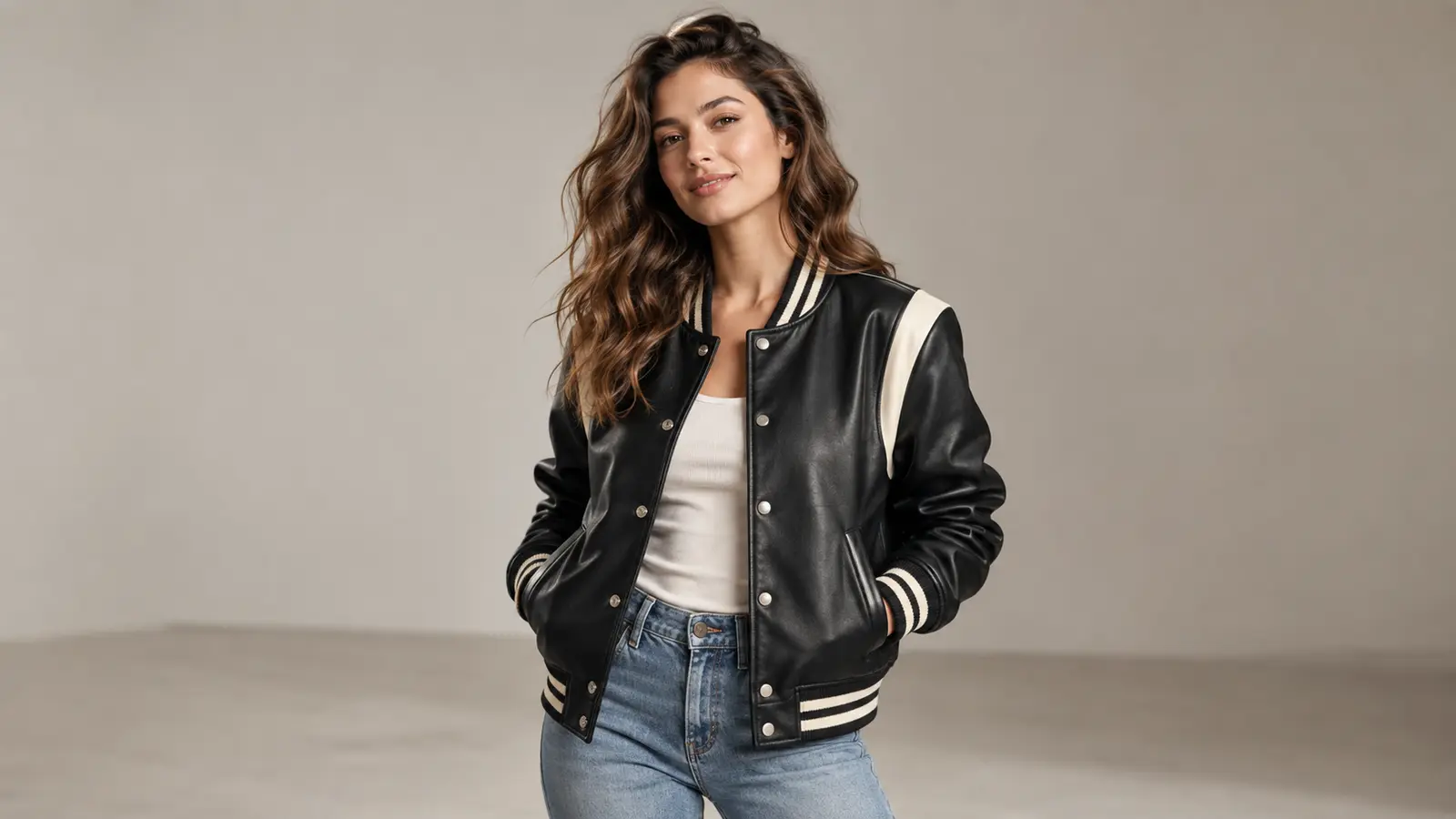
How Should a Women’s Varsity Jacket Fit? A Practical Fit & Layering Guide
A women’s varsity jacket should close without pulling, allow comfortable arm movement and keep its ribbed cuffs and hem in place. In a classic fit, the shoulder seam sits near the natural shoulder; in a deliberately relaxed or oversized cut, a dropped shoulder is part of the design. The right size is the one that preserves that intended shape over the layers you actually wear.
Women’s Varsity Jacket Fit at a Glance
| Fit point | Classic or regular fit | Relaxed or oversized fit | Warning sign |
|---|---|---|---|
| Shoulders | Seam ends near the shoulder edge | Seam may sit lower by design | Pulling toward the neck or an accidental droop |
| Bust and body | Closes flat with easy movement | More volume without strain | Snaps gap, front pulls, or body balloons unpredictably |
| Sleeves and cuffs | Cuff meets the wrist and stays there | Sleeve may look fuller; cuff still controls the opening | Cuff rides up or covers much of the hand |
| Hem | Ribbed band sits at the intended waist or upper hip | May sit lower or look blousier by design | Hem climbs when you move or hangs well below the intended proportion |
| Layering | Fits the planned top without restricting reach | Allows thicker layers while holding its shape | Comfort depends on leaving the jacket open |
How the Shoulders Should Fit
Classic or regular fit
For a classic varsity silhouette, the shoulder seam should meet the outer edge of your shoulder closely enough that the sleeve hangs cleanly. Reach forward, cross your arms and lift them to shoulder height. A small amount of movement in the fabric is normal; sharp pulling across the upper back, a collar that shifts backward or a seam that sits toward the neck usually means the jacket is too small through the shoulders.
The shoulder is a useful diagnostic because it affects both sleeve position and upper-body mobility. However, a comfortable shoulder does not cancel out a strained bust or a sleeve that is clearly the wrong length. Judge the jacket as a system, not by one seam.
Intentional dropped-shoulder or oversized fit
A dropped shoulder is not automatically a sizing error. On an intentionally oversized pattern, the seam is meant to sit down the upper arm and create a softer, roomier line. Look for consistency: the drop should be similar on both sides, the collar should remain centred, and the jacket should still move with you rather than twisting or sliding backward.
The easiest way to distinguish design from excess size is to compare the product’s intended silhouette with the rest of the garment. A purposeful oversized jacket usually combines the dropped shoulder with deliberate body volume and sleeve proportions. A classic pattern bought too large often looks loose in unrelated places without creating a coherent shape.
How the Bust and Body Should Fit
Fasten every snap or close the zipper over your normal base layer. The front should lie reasonably flat, and you should be able to breathe deeply, drive, reach forward and sit without the closure pulling apart. Horizontal stress lines, gaping snaps or a front that rises noticeably over the bust indicate that the jacket is too tight for that layer.
A classic fit can skim the torso without feeling compression-tight. A relaxed fit may hold more air at the side seams, but the collar, placket and ribbed hem should still look balanced. Do not expect leather panels to solve a major sizing problem by stretching; choose a size that works from the start.
Where the Sleeves and Ribbed Cuffs Should End
With your arms relaxed, the cuff should usually sit at the wrist bone or just below it. The rib should feel secure without leaving a deep mark. Bend your elbows and reach forward: the cuff may shift slightly, but it should not climb far up the forearm. If the chest and shoulders fit well but sleeve length does not, check whether the product lists garment measurements before changing the whole size.
Where Should a Varsity Jacket Hem Sit?
Many varsity jackets are cut to finish around the natural waist or upper hip, with the ribbed band creating a lightly blousoned shape. A cropped version may end higher; an oversized version may sit lower. The important test is stability. The hem should return to its intended position after you raise your arms, and it should not roll, dig in or ride upward during ordinary movement.
How Much Room Do You Need for Layering?
Layering room depends on what you will actually wear and on the jacket’s pattern. Test the heaviest realistic layer, not every possible layer. The jacket should close and move comfortably without distorting the intended shoulder or hem line.
| Planned layer | Fit test | Size decision |
|---|---|---|
| T-shirt or light top | Close the jacket and reach forward without chest or back strain | Use your measured size unless the product is intentionally slim |
| Fine knit or sweatshirt | Check bust comfort, elbow bend and cuff position | Choose the size that preserves movement and clean closure |
| Hoodie | Confirm the hood and neckline sit cleanly and the shoulders do not bind | Consider the larger size only if measurements support it |
Classic vs Relaxed vs Oversized Varsity Fit
| Silhouette | Shoulder | Body | Best for |
|---|---|---|---|
| Classic | Near the natural shoulder | Close but mobile | A neat collegiate profile and light layers |
| Relaxed | Natural or slightly lowered | Extra ease without dramatic volume | Casual wear and moderate layering |
| Oversized | Deliberately dropped | Generous, visibly intentional volume | A fashion-led proportion and roomier layers |
These labels are not standardized across every brand or product. Use them as descriptions, then confirm the actual chart and any garment measurements for the style you are considering.
How to Measure Yourself and a Jacket You Already Own
- Measure your bust around the fullest point with the tape level and comfortably snug.
- Measure your natural waist without pulling the tape tight.
- Measure your hips around the fullest point if the jacket or hem reaches that area.
- Measure sleeve length from the shoulder point to the wrist with the arm slightly bent.
- Lay a well-fitting jacket flat. Measure pit to pit, shoulder seam to shoulder seam, sleeve and back length using the seller’s stated method.
- Separate body measurements from finished-garment measurements. A jacket must be larger than the body at key points to provide wearing ease.
- Compare with the specific product chart and contact support if the measurement method is unclear.
OvrOne’s current women’s chart uses bust, waist, hip and sleeve measurements. It also advises choosing the larger size when measurements fall between sizes, especially for sweaters or hoodies, while noting that measurements may vary slightly by style.
| OvrOne size | Bust (in) | Waist (in) | Hip (in) | Sleeve (in) |
|---|---|---|---|---|
| XXS | 30–32 | 24–26 | 32–34 | 23 |
| XS | 32–34 | 26–28 | 34–36 | 23.5 |
| S | 34–36 | 28–30 | 36–38 | 24 |
| M | 36–38 | 30–32 | 38–40 | 24.5 |
| L | 38–40 | 32–34 | 40–42 | 25 |
| XL | 40–42 | 34–36 | 42–44 | 25.5 |
| XXL | 42–44 | 36–38 | 44–46 | 26 |
| 3XL | 44–46 | 38–40 | 46–48 | 26.5 |
| 4XL | 46–48 | 40–42 | 48–50 | 27 |
| 5XL | 48–50 | 42–44 | 50–52 | 27.5 |
Signs a Varsity Jacket Is Too Small
- The snaps gap or the zipper bows when fully closed.
- Horizontal pull lines appear across the bust or upper back.
- The shoulder seam sits inward and the collar pulls away from the neck.
- Reaching forward feels restrictive or raises the entire jacket.
- The ribbed hem climbs and stays up during normal movement.
- You can wear the jacket only open over the layer you bought it for.
Signs It Is Too Big vs Intentionally Oversized
- Too big: the collar shifts, the jacket twists, or one shoulder repeatedly slides backward.
- Too big: the cuffs cover much of the hand or the sleeves collapse in uncontrolled folds.
- Too big: the body balloons while the product is described or pictured as classic fitting.
- Intentionally oversized: the shoulder drop is deliberate and balanced on both sides.
- Intentionally oversized: the body and sleeves share one coherent relaxed proportion.
- Intentionally oversized: the jacket remains stable at the collar, cuffs and hem when you move.
What OvrOne Size Exchanges Show
| Field | data |
|---|---|
| Reporting period: | July 1 – October 26, 2026 |
| Size pattern | M: 310 units (25.8%); L: 280 (23.3%); S: 220 (18.3%); XL: 170 (14.2%); XS: 120 (10.0%); XXL: 100 (8.3%). |
| Exchange direction | M→L: 24; L→XL: 18; S→M: 16; M→S: 14; L→M: 12; XL→L: 10; other directions: 26. |
| Fit reasons | Bust/chest tightness: 28 cases; shoulder fit: 19; sleeve length: 17; body length: 22; layering room: 20; other fit reasons: 14. |
| Total size units | 1,200 |
| Total size exchanges | 120 |
| Data source | verified OvrOne records. |
| Methodology | counts grouped by size, exchange direction, and recorded fit-reason category for the stated reporting period. |
Active OvrOne Varsity Jacket Examples
Women’s Black Leather Varsity Jacket – a monochrome option for evaluating a straightforward varsity silhouette.
Women’s Black and White Leather Varsity Jacket – a contrast-panel option that makes shoulder, sleeve and body proportions easy to see.
Women’s Olive Green and White Leather Varsity Jacket – another contrast colourway to compare against the product’s intended fit and measurements.
Women’s Maroon and Grey Varsity Jacket – a two-tone alternative for shoppers choosing among active varsity styles.
Browse the current women’s varsity jacket collection for the live assortment, or compare related light-colour options in White Leather Jackets. Fit can vary by pattern, so use the product page and size guide together rather than assuming every varsity jacket fits identically.
30-Second Keep-or-Exchange Fit Checklist
- The jacket matches the intended classic, relaxed or oversized silhouette.
- The front closes without gaping, pulling or pressure over your planned layer.
- You can reach forward and raise your arms without sharp restriction.
- The cuffs sit at the wrists and the sleeves do not overwhelm the hands.
- The ribbed hem returns to its intended position after movement.
- The collar remains centred and the jacket does not twist or slide backward.
- Any dropped shoulder looks deliberate and consistent with the overall cut.
- If one area fails, you have checked whether the issue is size, sleeve or body length, or the product’s pattern.
Frequently Asked Questions
Should a women’s varsity jacket be tight?
No. A classic fit can be close and tidy, but it should still close comfortably and allow normal arm movement. Visible pulling at the bust, upper back or closure is a sizing warning.
Should the shoulder seam sit on the shoulder?
In a classic or regular fit, usually yes: it should sit near the shoulder edge. In an intentionally oversized pattern, a dropped seam may be correct. Judge it against the stated silhouette and the rest of the proportions.
Where should the sleeves end?
The ribbed cuff should normally meet the wrist bone or sit just below it, staying secure as you bend and reach. It should not ride far up the forearm or cover much of the hand.
Should I size up to wear a hoodie?
Only if your body measurements, the product measurements and a real hoodie fit test support it. A larger size that damages the shoulder and sleeve proportions may be worse than choosing a roomier pattern in your measured size.
How do I choose when I am between OvrOne sizes?
OvrOne’s size guide generally recommends the larger size for comfort when measurements fall between sizes, especially for thicker layers. Still check the specific product’s cut and any measurements before ordering.
Can a leather varsity jacket stretch into the right size?
Leather may soften with wear, but that is not a substitute for adequate bust, shoulder or sleeve dimensions. Start with a jacket that closes and moves comfortably rather than relying on major stretch.
Final Takeaway
A good women’s varsity-jacket fit is defined by intentional proportions and usable movement. Confirm whether the style is classic, relaxed or oversized; then test the shoulders, bust, sleeves, hem and your real layering plan. Use current OvrOne measurements as the decision point, and exchange the jacket when strain, instability or disproportion remains after a realistic fit test.